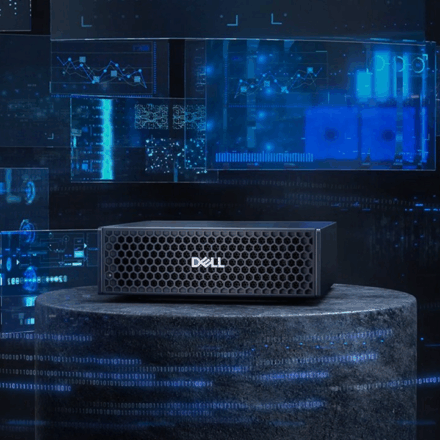
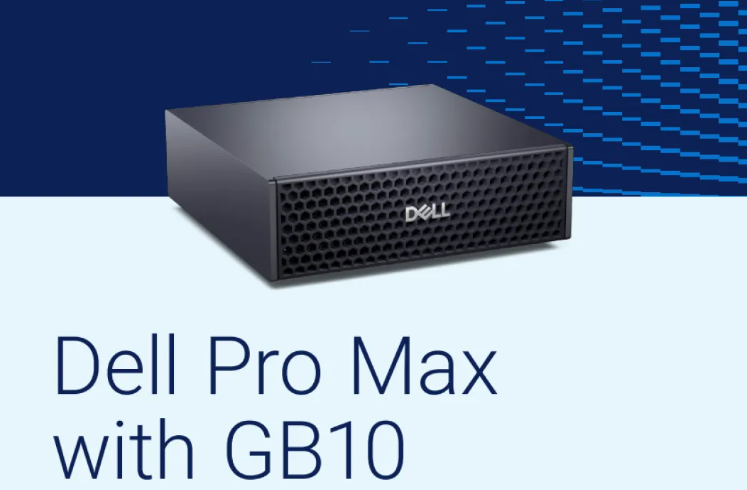
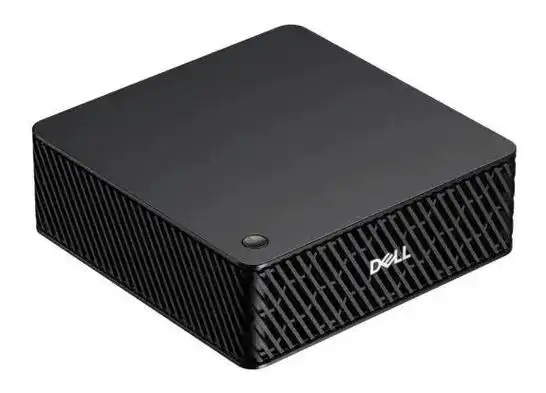
The era of the "Desktop AI Factory" has officially arrived. Dell has pulled the curtain back on the all-new Pro Max Micro, a small-form-factor (SFF) powerhouse designed specifically to handle the grueling demands of local AI workloads. By integrating the NVIDIA GB10 Grace Blackwell SoC, Dell is effectively shrinking the power of a server room into a device that sits comfortably next to your monitor.
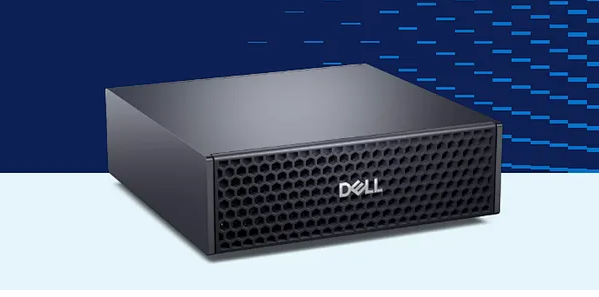
This launch signals Dell’s entry into the NVIDIA DGX Spark ecosystem, joining an elite group of OEMs aimed at putting "Personal AI Supercomputers" into the hands of developers and researchers.
Unbridled Performance: The Grace Blackwell Advantage
At the heart of the Pro Max Micro lies the GB10 Grace Blackwell chip, a silicon marvel that redefines what we expect from compact computing. This isn't just a standard processor upgrade; it’s a fundamental shift in architecture. The SoC features a 20-core CPU—utilizing a high-efficiency mix of 10 Cortex-X925 and 10 Cortex-X725 cores—paired with a Blackwell-architecture GPU boasting 6,144 CUDA cores.
What truly sets this machine apart for AI professionals is its 128GB of LPDDR5x Unified Memory. By allowing the CPU and GPU to share a high-speed memory pool, the Pro Max Micro eliminates the traditional bottlenecks found in standard PC architectures. This allows the system to process massive datasets and run Small Language Models (SLMs) with up to 200 billion parameters entirely on-device, ensuring data privacy and zero-latency performance without relying on the cloud.
Scalability and Professional-Grade Connectivity
Despite its tiny footprint, the Pro Max Micro is built for the "AI Factory" workflow. It features NVIDIA ConnectX-7 network ports, enabling multi-node clustering. This means developers can interconnect multiple units to scale their compute power, effectively building a modular supercomputer right in their office.
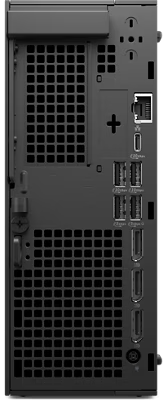
The I/O array is equally impressive, catering to high-end creative and technical setups:
• Triple USB-C Ports: All supporting DisplayPort output for multi-monitor configurations.
• HDMI 2.1: For 4K/8K high-refresh-rate visuals.
• 10Gb/s Ethernet: Ensuring lightning-fast data transfers and low-latency network performance.
• Storage: Support for up to 4TB of NVMe SSD storage to house large model weights and datasets locally.
The system is powered by a 280W AC adapter, striking a balance between extreme compute density and manageable desktop power consumption.
A New Paradigm for Local AI Development
The move toward local AI hardware like the Pro Max Micro and the NVIDIA DGX Spark platform represents a turning point for the industry. For years, massive AI model training required expensive server clusters. Now, the goal is to provide a "single-socket" solution for local inference, fine-tuning, and model testing.
Whether you are an architect running complex simulations, a data scientist training specialized SLMs, or a developer building agentic AI, the ability to maintain your IP locally—away from public cloud APIs—is a significant competitive advantage.
Availability and Market Positioning
The Dell Pro Max Micro is slated for release on October 15. While official pricing for the Dell-specific build is still under wraps, the industry reference for the DGX Spark platform has recently shifted from 3,000toastartingpointof∗∗3,999**. Given the premium Blackwell architecture and the specialized DGX-OS support, this is positioned as a high-value investment for AI-driven enterprises and research labs.
With the Pro Max Micro, Dell is not just selling a PC; it is providing the foundation for the next generation of on-premise artificial intelligence.