For years, AI engineers and data scientists have been caught in a frustrating middle ground. On one side, high-end consumer GPUs like the RTX series offer great raw power but quickly hit a "memory wall" when dealing with Large Language Models (LLMs). On the other, data center clusters offer infinite scale but come with a "cloud tax"—monthly bills that can easily swallow a startup's seed funding.
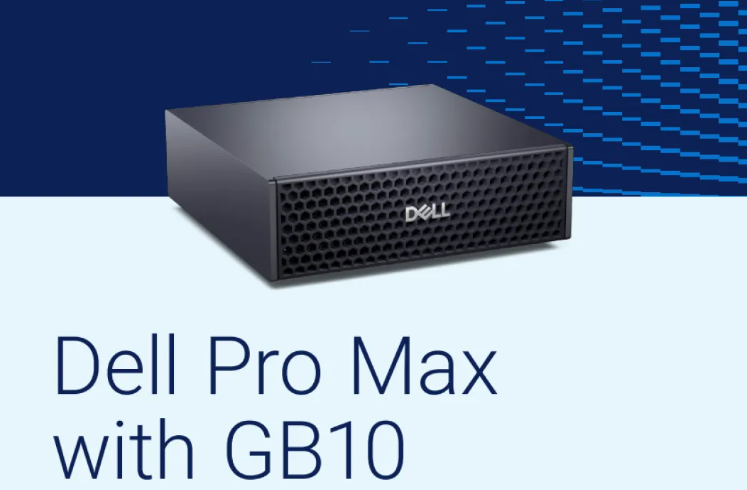
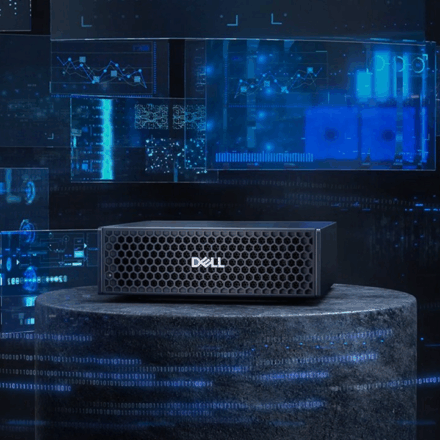
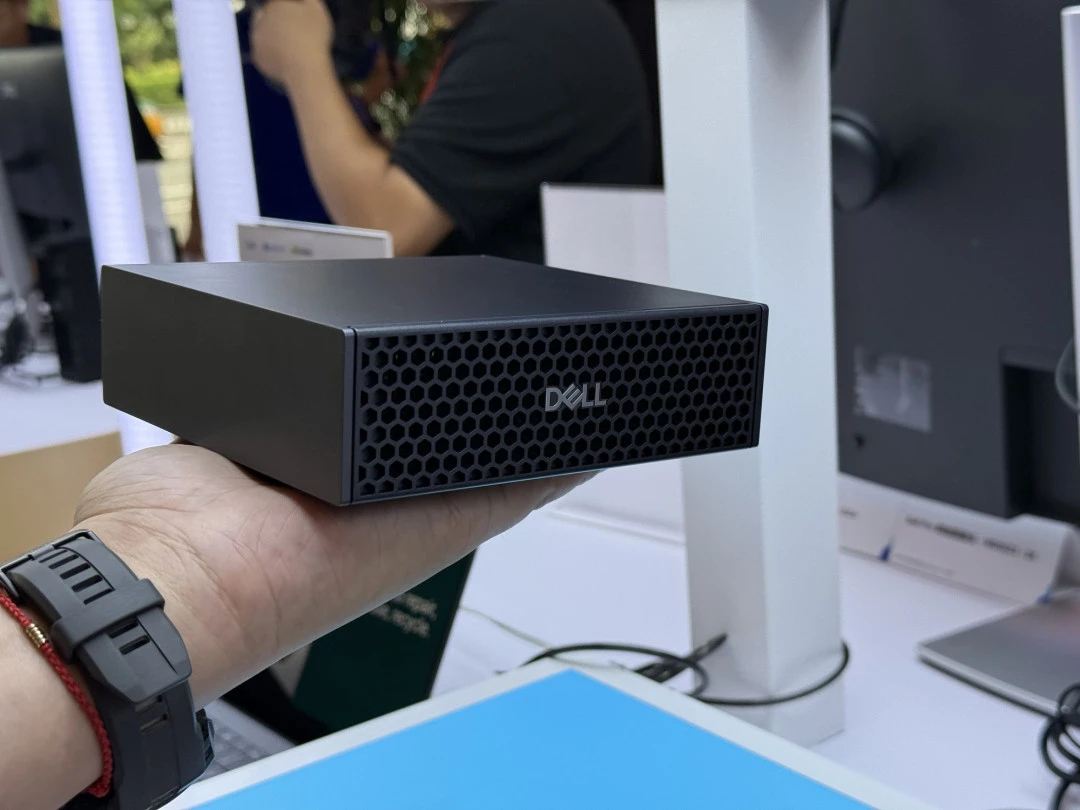
The Dell Pro Max with GB10 is designed to bridge this gap, effectively shrinking a data center rack into a 1.2-liter chassis that fits between your coffee mug and your monitor. It isn’t just a "small PC"; it’s a fundamental shift in local AI compute.
Breaking the Memory Bottleneck: The Unified Advantage
The biggest hurdle in local AI development isn't just raw TFLOPS; it's VRAM. Even a flagship workstation card like the RTX 6000 Blackwell Edition, with its 96GB of memory, starts to struggle once you push past the 40-billion parameter mark. If the model doesn't fit in the memory, performance falls off a cliff.
The Dell Pro Max with GB10 rewrites this logic by leveraging the NVIDIA Grace Blackwell architecture. By utilizing NVLink C2C (Chip-to-Chip) technology, the system fuses an ARM-based Grace CPU with a Blackwell GPU. This creates a 128GB Unified Memory Architecture (UMA).
In simple terms, the CPU and GPU no longer act like two separate entities passing data back and forth over a narrow bridge. They share a single "warehouse" of memory. This allows a device no larger than a thick dictionary to run inference on 200-billion parameter models locally—a task that previously required a server room and a massive cooling budget.
From Prototyping to the Edge: A New OT Powerhouse
While the Pro Max is a dream for the developer desk, the real "killer app" for this hardware is High-Performance Edge Computing. In environments like manufacturing plants, oil rigs, or secure federal facilities, sending data to the cloud isn't just expensive—it’s often a security or latency nightmare.
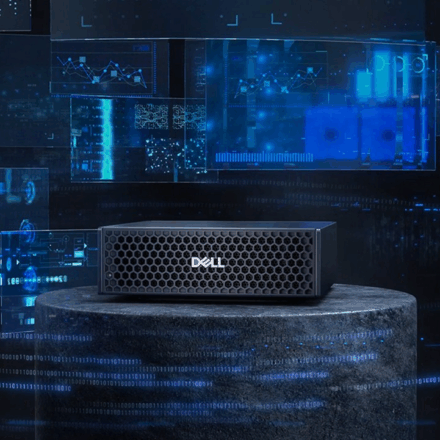
Because the GB10 delivers 1 Petaflop of FP4 performance while drawing significantly less power than a full-sized rack, it is the ideal candidate for "Air-Gapped" AI.
• Video Surveillance: Running real-time, high-parameter vision models locally for site security.
• Manufacturing: Deploying complex quality-control algorithms directly onto the production line.
• Financial Privacy: Developing and testing proprietary risk models without a single packet of data leaving the local network.
The $3,000 ROI: Local Box vs. Cloud Drain
For a small team or an independent researcher, the math is becoming increasingly clear. Running continuous experiments on top-tier cloud instances can cost anywhere from $500 to $2,000 per month. At an expected price point around $3,000, the Dell Pro Max with GB10 pays for itself in less than a quarter.
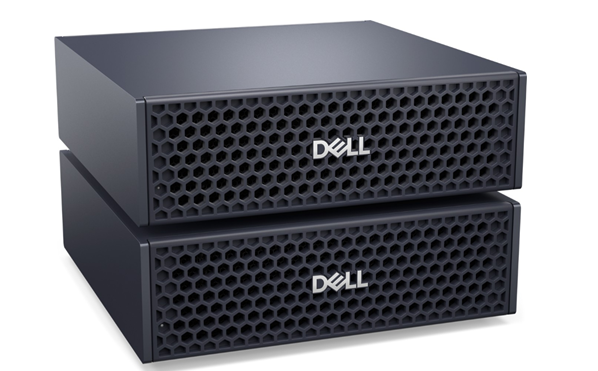
Furthermore, the system is built for Dual-Node Scaling. If your models grow, you don’t need to scrap your hardware. By using the integrated ConnectX-7 200G interfaces, you can bond two Pro Max units together. This effectively doubles your unified memory and compute, allowing for the development of models up to 400 billion parameters.
A Developer Reality Check: Software over OS
It is crucial to understand that the Pro Max with GB10 is a specialized instrument, not a general-purpose workstation. You won’t be running Windows or macOS here. This is a container-centric AI node running NVIDIA DGX OS (based on Ubuntu Linux).
Dell has optimized the "out-of-the-box" experience to be as frictionless as possible for the AI professional. It comes pre-loaded with the NVIDIA AI Enterprise software stack, CUDA libraries, and the most common AI frameworks. The goal is simple: unbox the hardware, pull your model from the NGC catalog, and start fine-tuning in minutes.
The Verdict
The Dell Pro Max with GB10 represents the democratization of supercomputing. By moving away from the traditional "PC" mindset and embracing a data-center-down architecture, it allows innovators to focus on the weights and biases of their models rather than the limitations of their hardware. For those ready to leave the constraints of consumer GPUs and the high costs of the cloud behind, the future of AI development has finally arrived at the desk.